
Blog
The Core of High-Frequency Transformers
Iron, ferrite, and advanced cores each carry trade-offs in high-frequency transformer design. Pacific Transformer engineers reliable, efficient custom units.
No Such Thing as 'One Size Fits All'
High-frequency transformers have long served radio frequency circuits, amplifiers, antennas, and transmitters. Current demand has surged due to internet-connected devices, renewable energy, and electric vehicles. Unlike their low-frequency counterparts, these require distinct design considerations.
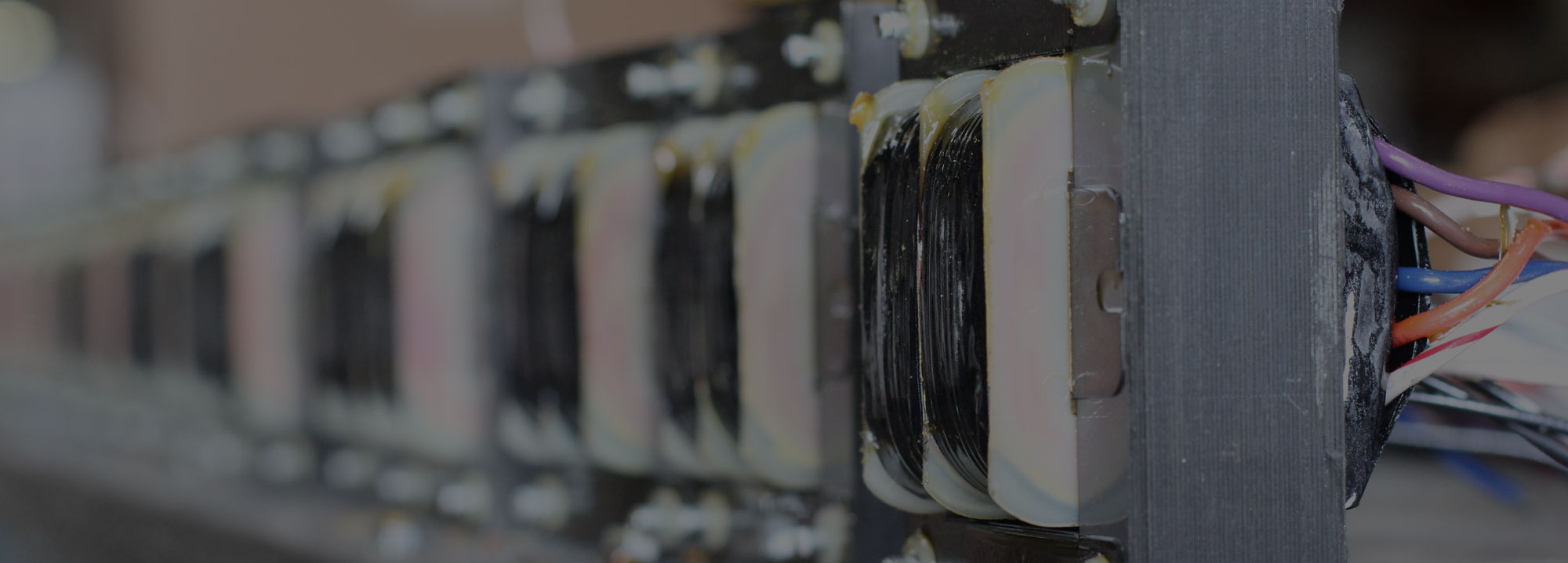
Standard 60Hz transformers typically employ laminated iron cores. However, as frequency increases, iron cores experience rising hysteresis losses—the rubbing effect. This rapid magnetization and demagnetization generates excessive heat, reducing efficiency. Ferrite cores minimize these losses but sacrifice mechanical strength and become brittle at larger sizes. Application type and power requirements determine core material viability.
Multiple advanced materials beyond ferrites offer alternatives, each presenting unique trade-offs. There is no one-size-fits-all approach when it comes to high-frequency transformers. Pacific Transformer's engineers possess decades of experience designing reliable, efficient units used in mission-critical military and aerospace applications.
Get a Quote
A few questions in — a quote back in one business day.
Our quoting system walks you through your project one question at a time — voltages, quantities, application — and builds your drawings as you go. A PACTRAN applications engineer stands behind every quote.
1DAY
Quote turnaround
Pricing and lead time within 1 business day
2DAYS
Prototype turnaround
A wound, tested prototype in 2 business days
Prefer to talk it through? 800-325-0501
Start your quote
Takes about 5 minWe'll ask, for example
What input voltage does your design see?
- 01
Describe your project. In your own words — give us what you know.
- 02
Answer a few guided questions. We only ask what your quote needs.
- 03
Get your quote. Pricing, lead time, and preliminary drawings — reviewed by an engineer.