
Blog
Essential Questions When Designing a Power Transformer
A Pacific Transformer engineer outlines the essential questions for designing a custom power transformer: type, primary, secondary, finish, and geometry.
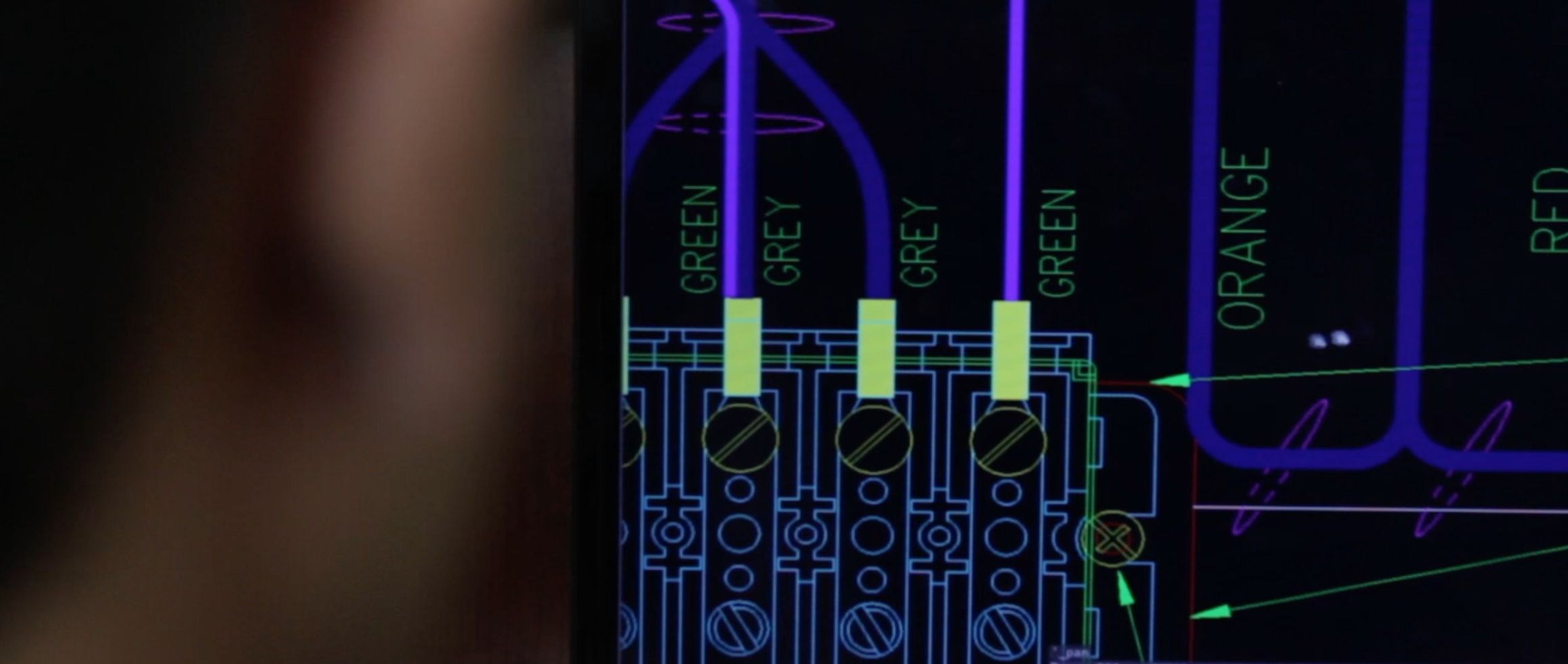
What are the essential questions that need to be considered when designing a custom power transformer?
We asked one of our lead engineers, what are the essential questions you ask when designing a custom power transformer?
He broke down these questions into five primary categories that cover 90% of the applications
1 – The Type of Transformer
What type of transformer does it need to be? The most common are:
- Single Phase
- 2-Phase
- 3-Phase
Don't worry; we specialize in the not-so-common types as well.
2 – Primary (The Input Section)
- What is the input voltage?
- What is the input current?
3 – Secondary (The Output Section)
- What is the desired output voltage?
- What is the desired output current?
If the secondary is DC, what is the rectifier topology? The most common are:
- Full Wave Bridge
- Bridge
- Center-Tapped
- Single Phase
4 – Finish (The Connectors)
What type of connectors do you need for your application? The most common are:
- Wire leads
- Terminal Block
- Solder Lugs (Used primarily on PCB boards)
- Copper Terminals
5 – Geometry (The Size)
What is the desired size or the space restrictions of the transformer?
In more complex applications, there may be a few other considerations categories to discuss, such as:
Regulation
The voltage regulation of the transformer is the percentage change in the output voltage from no-load to full-load. Voltage regulation will vary as the power factor varies. The regulation is measured in percentage.
Temperature
- What is the ambient temperature range the power transformer will be working within?
- What is the maximum allowable temperature rise?
- Will there be any cooling?
Testing
Some applications will require additional testing to receive a particular certification. For example, many transformers built for defense require a MIL-SPEC certification, which subjects random samples to vibration testing.
Regardless of your project's complexity, our engineering team has the expertise to design the ideal solution for your application.
Get a Quote
A few questions in — a quote back in one business day.
Our quoting system walks you through your project one question at a time — voltages, quantities, application — and builds your drawings as you go. A PACTRAN applications engineer stands behind every quote.
1DAY
Quote turnaround
Pricing and lead time within 1 business day
2DAYS
Prototype turnaround
A wound, tested prototype in 2 business days
Prefer to talk it through? 800-325-0501
Start your quote
Takes about 5 minWe'll ask, for example
What input voltage does your design see?
- 01
Describe your project. In your own words — give us what you know.
- 02
Answer a few guided questions. We only ask what your quote needs.
- 03
Get your quote. Pricing, lead time, and preliminary drawings — reviewed by an engineer.